Founding Product Designer at Lucens AI. Redesigned MathSolver from the ground up and shipped 4 new features — grew to 30K registered users in ~1 year.
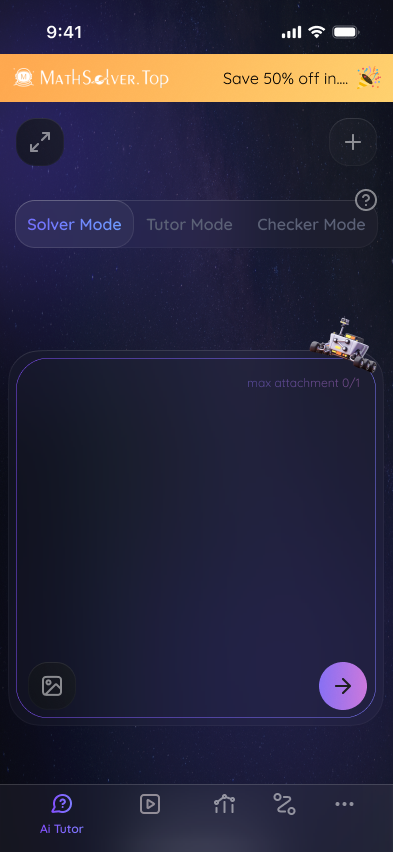
|Input your question in text here
Solve this question step by step
Example
When I joined, MathSolver was a one-function search tool — and nothing else. No system, no research, no funnel. Three structural gaps to close before any feature could compound.
A single search box dropped a solution. No context, no follow-up, no way to learn. Users searched once and left.
No analytics on activation or retention, no learner interviews on file, no segmentation of who was actually showing up.
Every screen was a one-off. Colors, spacing, and components drifted across the app. Shipping a new feature meant redesigning the rails.
MathSolver had a Discord of math learners recruited from online communities before launch. I ran multi-round tests with them on every new function before locking the flow — fast, in-context feedback each cycle.
With no PM in place, I worked directly with the founder, the engineering team, and the marketing team — owning roadmap calls across all three. Prioritization ran on activation-and-retention impact, not feature count. Scope decisions made in 30-minute stand-ups, not docs.
Designed in Figma, handed off side-by-side with engineers, QA'd in prod. Anything bigger than two weeks, I broke down.
Partnered with the growth marketer on onboarding, upgrade prompts, referral, and landing pages. Instrumented every surface before it shipped.


Before launch, MathSolver had built a Discord community spanning our three core user segments — middle schoolers, high schoolers, and adults preparing for entry exams (med-school MCAT, grad-school GRE/GMAT, and other math-heavy programs). We recruited members from online math forums and study groups. That cohort became the research backbone of the redesign. As each new version of the design landed, we tested it with the Discord cohort across three layers of feedback: qualitative interviews to surface intent, user surveys for quantitative data, and LogRocket heatmaps that played back every cursor and scroll path. The breakdown below shows the relative weight of each method in the final decisions.
I need a structured breakdown of my knowledge in the SAT test.
Pre-redesign survey across the Discord cohort — questions on audience, goals, study habits, and feature priorities. Findings below decided what we shipped.
~80% in middle + high school, ~20% adults preparing for entry exams (MCAT / GRE / GMAT).
→ Two-cohort positioning, surfaces tuned to each.
Goals differed by cohort — middle wanted single-problem solves; high wanted a structured study plan; adults wanted full-test rehearsal.
→ Four parallel surfaces: AI Tutor · Knowledge Graph · Daily Study Plan · Bulk Solving.
Most respondents returned without a study routine.
→ Daily Study Plan became the retention loop.
Top requests: step-by-step explanations, weak-area diagnosis, full-test PDFs.
→ Mapped 1:1 to the shipped feature set.
Users tested the inherited web app while LogRocket recorded their full sessions — cursor paths, hover dwells, and click-aways. Reviewing the replays showed exactly where attention stalled on the old design.
Individual problem search — they came with one math question, got an answer, and left. Solver speed mattered more than structure.
Structured study plan — wanted their SAT/ACT knowledge mapped systematically, not just one answer at a time.
Test-prep on a deadline — MCAT, GRE, GMAT, and other math-heavy programs. Wanted full-test reps, not isolated solves.
Every choice in the redesign — the new system and the four main features — traces back to a finding above.
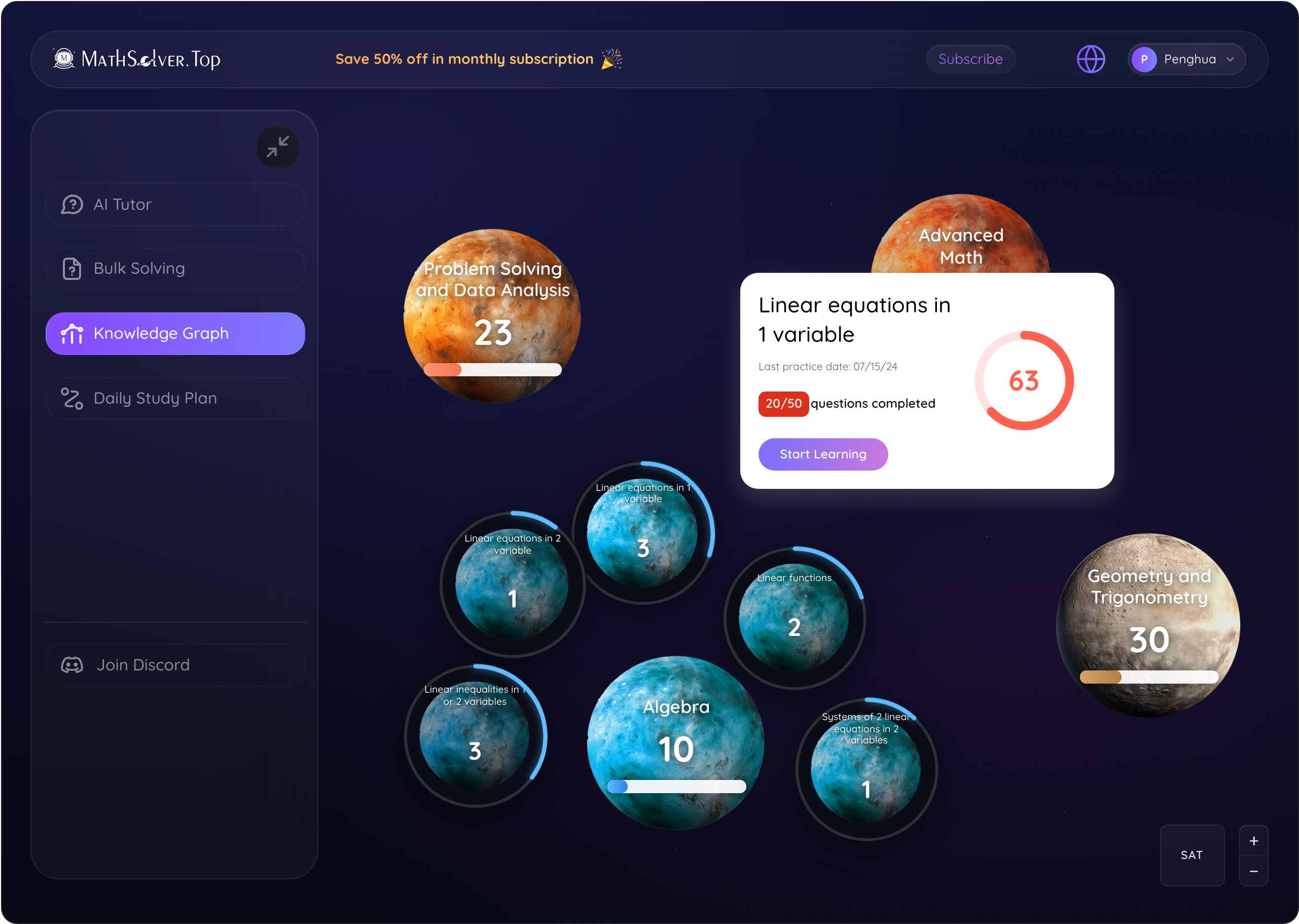
Research kept returning to one ask: let learners break knowledge into navigable points. We answered with a planet-and-orbit metaphor — each main planet is a knowledge point, and the smaller planets orbiting it are the breakdown of that point. Enter a planet and its sub-points orbit you as a fresh system. The metaphor outgrew a single feature — it became the visual language for the entire space-themed design system.
Middle schoolers (the largest cohort) came for fast, single-problem solves. The Solver became the entry surface for that intent.
Adults preparing for MCAT / GRE / GMAT needed full-test rehearsal, not isolated solves. Bulk Solving processes whole-test PDFs and returns worked solutions end-to-end.
High schoolers said it directly in interviews: "I need a structured breakdown of my knowledge." Every concept became a node, every topic a planet — a navigable map of what they know and what's next.
Survey showed most respondents returned without a routine. The Daily Plan turned single-visit traffic into a return habit — the retention loop.
MathSolver
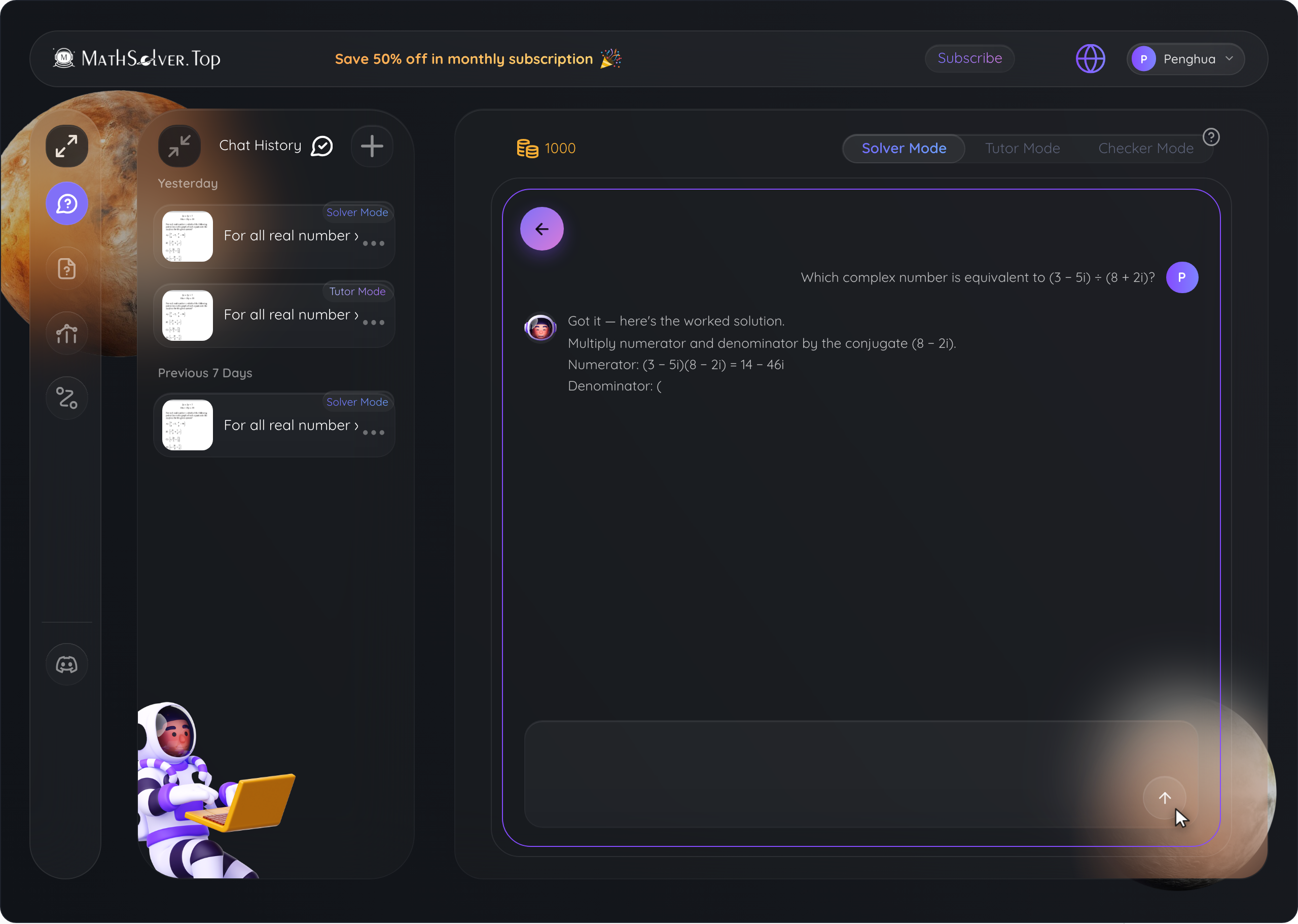
A lo-fi sketch of the core interaction. Click the chevron to collapse the rail and reclaim canvas; click any of the four functions to switch surface. The collapsed state is the default — by the time learners reached MathSolver, AI chat products had already trained the muscle memory of a slim-rail layout. We carried that habit into the redesign and freed the canvas for the math itself.
Plus 8+ supporting sub-features that connected the funnel end-to-end.
Learners don't arrive with the same goal. Some need the answer before class; some need to understand it before the test; some want to check work they've already done. We split the output into three modes without splitting the input.
Three distinct jobs surfaced from the same learner on different days:
"If I just need to check my answer, the walkthrough wastes my time."
We made the mode a front-door choice — three pill buttons above the input — so the AI is primed before any output renders. Each mode answers one of the three jobs:
Try it → tap any state below to see the prototype shift. Sidebar collapsed keeps the icon rail tight to the chat. Sidebar expanded reveals the four feature labels. Chat history bar expanded slides past conversations out from beside the rail. Built from the live Figma exports — every transition runs locally, no canned video.
|Input your question in text here
Solve this question step by step
Example
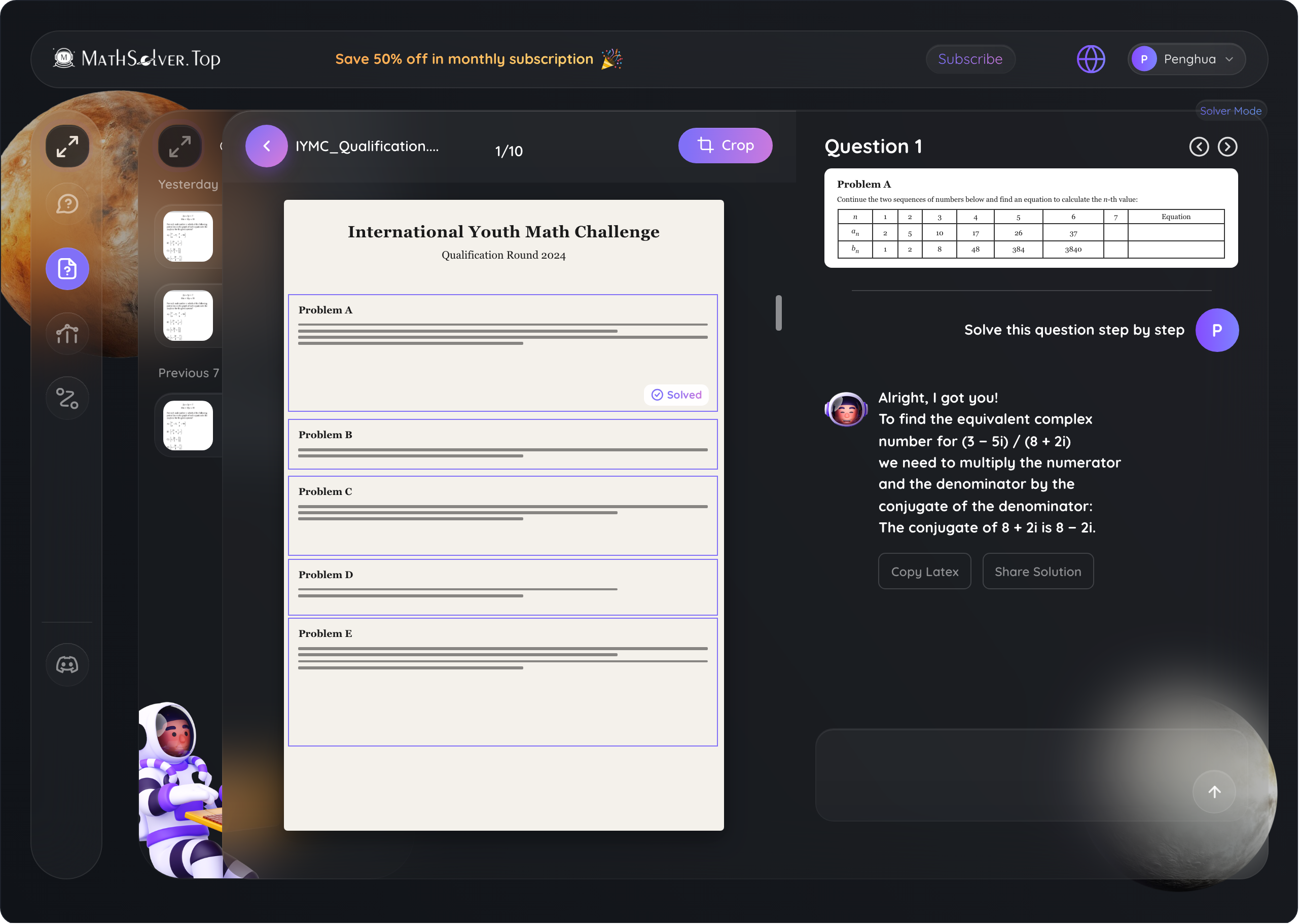
Test-prep learners rehearse with whole practice tests, not isolated problems. Bulk Solving accepts a full PDF and returns step-by-step solutions for every question on the paper.
Adults preparing for MCAT, GRE, GMAT, and similar entry exams needed full-test rehearsal — 40+ problems per practice paper. Solving them one-by-one in a single-problem tool was a non-starter; the friction ate the study time that should have gone into the practice.
"I just want to upload the whole test and get every solution."
Made PDF upload a first-class input alongside text and image. The AI parses every question on the test, solves each one step-by-step, and returns solutions in the same order as the original — so learners can review alongside their own work without losing the structure of the practice paper.
High schoolers didn't want one more answer — they wanted a map of what they knew and what was missing. The Graph turned the curriculum into a navigable orbit.
SAT/ACT prep felt like a list of disconnected topics. Students could solve a problem and still not know where it sat in the bigger curriculum — or what to study next.
"I need a structured breakdown of my knowledge in the SAT test."
Built the curriculum as a planetary system — each main planet is a topic, each sub-planet a concept beneath it. Click into a planet and its sub-points orbit you as a fresh canvas. Mastered nodes settle; weak spots stay bright — turning "what to practice" from a guess into a glance. The metaphor outgrew the feature and became the anchor for the entire design system.
KG also seeds the Daily Study Plan — every weak node becomes a candidate for tomorrow's practice — making it the diagnosis half of the retention loop we ran with growth.
A search tool gets traffic; a daily plan gets retention. The Plan turned single-visit users into a return habit — the explicit retention loop for the product.
The pre-redesign survey was unambiguous: most respondents returned without a routine. They came when they were stuck and forgot in between — so growth leaked out the back as fast as it came in the front.
Tied the Plan to the Knowledge Graph — weak nodes above a threshold became the day's practice, ordered by impact. The day's tasks live on the home surface, not buried in settings; each completion advances a planet's mastery and feeds tomorrow's plan. The loop runs itself.
* 7-day retention lift delivered in partnership with our growth marketer, who owned the instrumentation and experiment design for the KG → DSP retention loop.
The biggest wins came from asking "what metric does this move?" before "what screens does this need?" Each of the four pillars was scoped against a cohort and a funnel stage before a frame was opened in Figma. Polish without that lens is wasted motion in a startup.
I was tempted to "ship now, clean up later." Every time I did, I paid double. Starting tokens and components on week two cost two days and saved two months — and gave engineering a shared vocabulary instead of one-off pixel pushes.
The +8% retention wasn't mine alone — it was the KG → DSP loop and the instrumentation sitting in the same room. The biggest multiplier I had as a growth-focused designer was treating the growth team as a co-author, not a downstream client. The most valuable design reviews I sat in weren't with PMs — they were with growth.
At a 10–15 person startup with no PM, every founder idea landed on me. The value I added wasn't execution speed — it was being the person who could name the tradeoff in research terms ("this fails the 80/20 cohort") and kill the wrong feature without apology.
Users don't separate "good design" from "trustworthy tool." Replacing the inherited UI's clutter with a metaphor-driven visual language moved activation — not because it looked nicer, but because it looked like something that deserved a signup.
The planetary system came out of one user-interview ask — "I need a structured breakdown of my knowledge." We built it for Knowledge Graph; it became the anchor for the entire design system, the brand, and how engineers talked about the product internally. The best visual ideas don't decorate; they unlock.
MathSolver taught me that a growth-focused designer isn't the one who ships the most screens — it's the one who ships the screens that move the curve. If you want to see the live product —